
In today’s world of endless food choices, understanding how to read nutrition labels is one of the most powerful tools you can have on your weight loss journey. Those small panels on the back of food packaging contain a wealth of information—but only if you know what to look for.
Registered dietitians agree: learning how to decode a nutrition label can help you make smarter, healthier decisions and avoid hidden pitfalls. Here’s how to read labels like a pro.
1. Start with the Serving Size
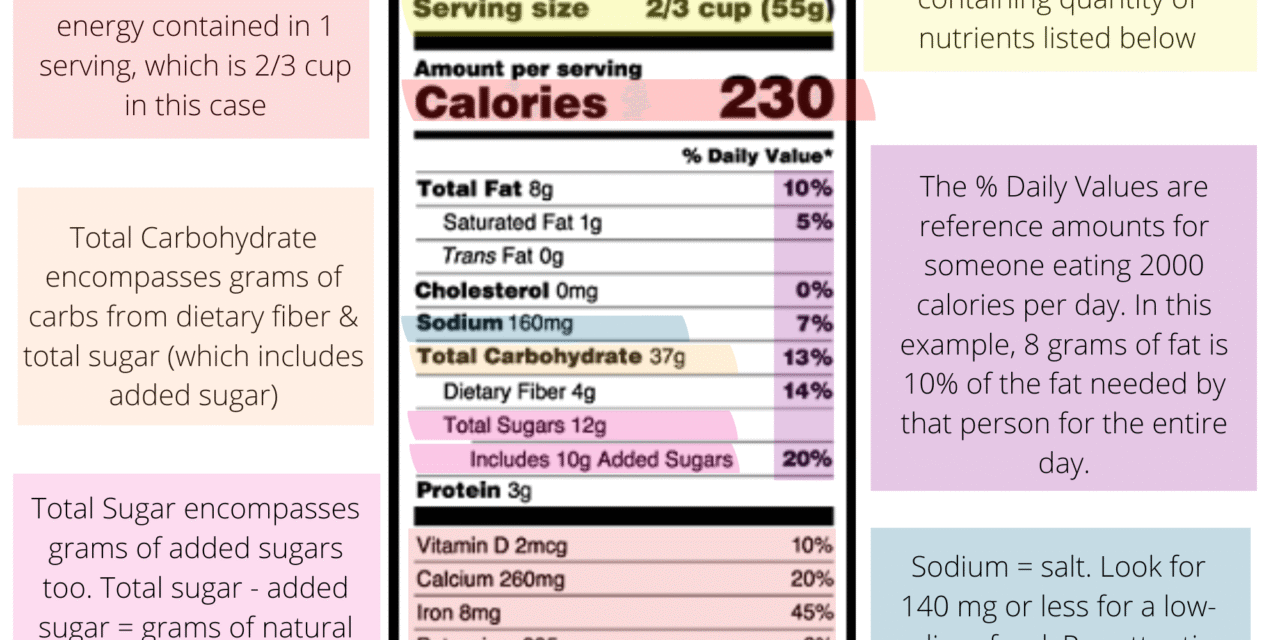
At the top of every nutrition label, you’ll see the serving size and the number of servings per container. This is the foundation of everything on the label.
Pro Tip: Always compare your actual portion to the listed serving size. If the label says 1 cup but you eat 2, double everything—calories, fat, sugar, and so on.
2. Check the Calories
The calorie count tells you how much energy you’ll get from one serving of the product. While calories aren’t the only factor to consider, they matter for weight management.
Pro Tip: Use the calorie info to stay within your daily goals—but also consider the quality of those calories.
3. Limit Added Sugars, Saturated Fats, and Sodium
These three are often called “limit nutrients” because high amounts can harm your health when consumed regularly.
-
Added sugars: Look for products with 5g or less per serving.
-
Saturated fats: Keep these to under 10% of your total daily calories.
-
Sodium: Aim for 140mg or less per serving if you’re choosing a low-sodium product.
Pro Tip: “Sugar-free” doesn’t always mean healthy. Check what ingredients were added to replace sugar.
4. Look for Nutrients to Boost
Some nutrients are often lacking in the average diet—like fiber, vitamin D, calcium, iron, and potassium. These support digestion, bone health, energy, and heart health.
Pro Tip: Choose foods with at least 3g of fiber per serving to help with fullness and weight control.
5. Scan the Ingredient List
Ingredients are listed in order of quantity. The first few ingredients make up most of the product. A long list with unfamiliar or artificial ingredients could indicate a highly processed food.
Pro Tip: If sugar (or its many aliases like “high fructose corn syrup” or “maltose”) appears in the first three ingredients, it’s likely a sugar-heavy product.
6. Beware of Health Buzzwords
Terms like “low-fat,” “gluten-free,” “natural,” or “organic” sound healthy but don’t guarantee a nutritious product. Always read the label to know the real story.
Pro Tip: Focus on the actual nutritional breakdown instead of relying on front-of-package claims.
Final Thoughts
Mastering nutrition labels empowers you to take control of your eating habits. By paying attention to serving sizes, calories, added sugars, and ingredient quality, you’ll be better equipped to make choices that align with your weight loss and health goals. The more you practice, the more second nature it becomes.