

When it comes to fitness, the internet is overflowing with advice — but not all of it is accurate. Some tips can actually slow your progress or even cause harm. To help you separate fact from fiction, we’ve gathered insights from certified fitness professionals who know what truly works. Here’s how to avoid the most common fitness myths so you can stay on the right track.
Myth #1: You Need to Work Out Every Day to See Results
The Truth:
Rest days are just as important as workout days. Muscles grow and repair themselves during recovery, not while you’re training. According to the American Council on Exercise, overtraining can lead to fatigue, injury, and burnout. Aim for 3–5 quality workouts per week and use rest days for stretching, light walks, or yoga.
Myth #2: Lifting Weights Will Make You Bulky
The Truth:
This is one of the most persistent myths, especially among women. Professional trainers emphasize that building large muscles takes years of specialized training and nutrition. Strength training actually helps create a lean, toned look, boosts metabolism, and supports bone health. Plus, muscle burns more calories at rest than fat — meaning you’ll torch calories even while relaxing.
Myth #3: Cardio Is the Only Way to Lose Weight
The Truth:
While cardio is great for heart health, it’s not the sole fat-burning hero. Experts say that combining strength training with cardio is the most effective way to lose fat and keep it off. Strength training preserves muscle mass while you lose weight, which keeps your metabolism from slowing down.
Myth #4: More Sweat Means a Better Workout
The Truth:
Sweating is your body’s way of cooling down, not an indicator of calorie burn. A high-sweat workout might feel intense, but it doesn’t automatically mean you burned more fat. Focus on consistency and progressive overload in your workouts rather than chasing sweat.
Myth #5: Spot Reduction Works
The Truth:
You can’t burn fat from a specific area by targeting it with exercises. Doing endless crunches won’t make belly fat disappear — fat loss happens across the entire body. Professionals recommend a combination of full-body strength training, cardio, and a balanced diet for the best results.
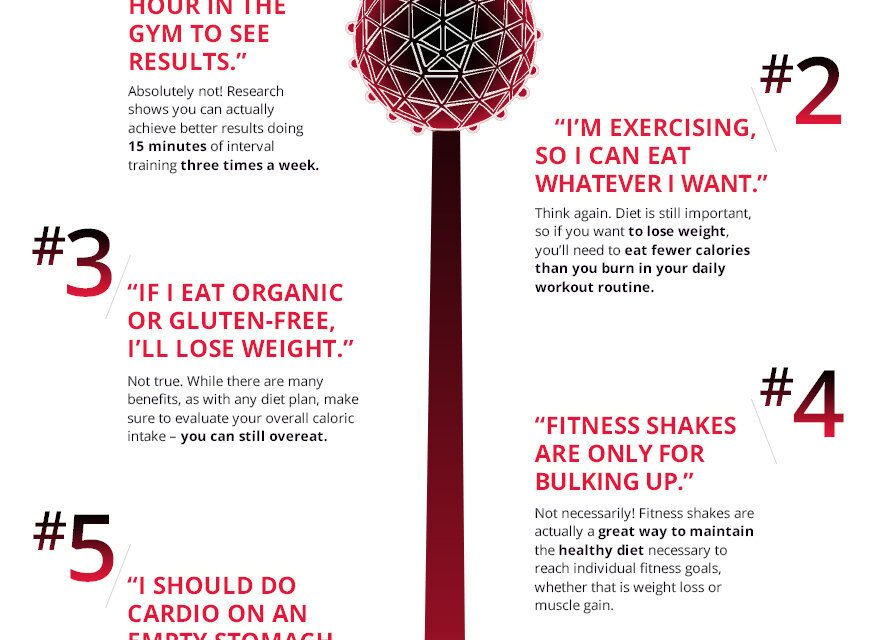
Myth #6: You Must Work Out for Hours to See Results
The Truth:
Short, high-intensity workouts can be just as effective — sometimes even more so — than long, drawn-out sessions. HIIT (High-Intensity Interval Training) is a popular method among trainers for burning calories and improving endurance in as little as 20–30 minutes.
Myth #7: If You’re Not Sore, You Didn’t Work Hard Enough
The Truth:
Muscle soreness is not the only sign of an effective workout. Soreness often occurs when you try new movements, but as your body adapts, you may not feel as sore — and that’s a good thing. Consistent improvement in strength, stamina, and flexibility is a much better measure of progress.
How to Protect Yourself from Fitness Misinformation
-
Check the source — Look for advice from certified trainers, registered dietitians, or reputable health organizations.
-
Understand your body — Fitness is not one-size-fits-all; what works for one person may not work for another.
-
Focus on sustainability — Quick fixes and extreme routines are rarely long-term solutions.
-
Track your progress — Use measurable goals like improved endurance, strength gains, and energy levels, not just the number on the scale.
Final Takeaway
The fitness industry is full of myths that can waste your time and energy. By following evidence-based advice from trusted professionals, you’ll make smarter choices, avoid frustration, and see better results. Remember: sustainable fitness is about consistency, balance, and patience — not quick fixes.